When Your Deadbolt Jams: The Truth About Philadelphia Door Lock Repair
Living in Philadelphia means dealing with old buildings, humid summers, and the occasional lock that decides to quit at the worst possible moment. I have spent enough years in the locksmith industry to know that a jammed deadbolt or a stuck keyless entry system is rarely a simple fix. Whether you live in a Rittenhouse Square brownstone or a row house in the Northeast, the principles of Philadelphia door lock repair stay the same: diagnose the problem, choose the right hardware, and decide whether to call a local locksmith or attempt the job yourself.
Why Locks Fail in Philadelphia Homes
Philadelphia has a mix of housing stock that goes back more than a century. The same door that opened smoothly in 1925 might now be fighting against a frame that has settled, paint layers that have thickened, and weather stripping that has compressed unevenly. Many of the lock problems I see come down to alignment. A deadbolt that used to slide home with a light push now requires a shoulder bump. That is usually a sign that the strike plate has shifted or the door has sagged on its hinges.
Another common issue is worn internal parts. Brands like Schlage and Kwikset make solid residential locks, but even a good lockset wears out after thousands of cycles. The springs inside the latch mechanism lose tension, the pins in a pin-tumbler cylinder get sticky, and the key starts to feel rough going in. If you have a SmartKey system that suddenly stops working, the electronic components might have a dead battery or a corroded contact. These are the moments when you appreciate knowing a reliable residential locksmith who can show up fast.
When it comes to Philadelphia door lock repair, the first thing I tell homeowners is to check the simple stuff before calling for help. Spray lubricant into the keyway, tighten the screws on the hinges, and see if the door closes evenly. Many calls I get for 24/7 emergency service turn out to be a misaligned strike plate that a few minutes with a screwdriver could fix. But if the lock itself is broken, or if you have a high-security cylinder like Medeco or Mul-T-Lock, do not try to drill it out. Those locks are designed to resist tampering, and you will only make the repair more expensive.
Choosing the Right Lock for Your Door
Philadelphia doors come in all thicknesses and materials. A solid wood door from the 1920s needs different hardware than a modern steel door. The lockset you choose should match the door's prep, the level of security you need, and the look you want. Baldwin makes beautiful mortise locks that suit historic homes, but they require precise installation. Yale and Primus offer grade-2 and grade-1 cylindrical locks that work well for most residential and light commercial applications. For a rental property or a quick upgrade, Kwikset's SmartKey deadbolt gives you keyless entry without rekeying every time a tenant moves out.
One mistake I see often is installing a deadbolt that is too long for the door thickness. A standard deadbolt needs a 2-3/8 inch or 2-3/4 inch backset, measured from the edge of the door to the center of the keyhole. If you get that wrong, the bolt will not reach the strike plate, or it will stick out too far and bind. Another mistake is buying a lock with a different handing than your door. A right-handed door needs a right-handed lock; a left-handed door needs a left-handed lock. It sounds simple, but I have swapped out more than a few locksets that were installed backwards.
For commercial locksmith work, the stakes are higher. A broken lock on a storefront in Center City means lost business and potential security breaches. Commercial locks often use heavy-duty cylindrical locks from Schlage or Medeco, and they may be part of a master key system. If you manage a building with multiple tenants, you need a locksmith who understands how to rekey cylinders so that each tenant's key opens only their door, while a master key opens everything. That kind of work requires precision and a good inventory of pins and springs.
When to Call a Professional
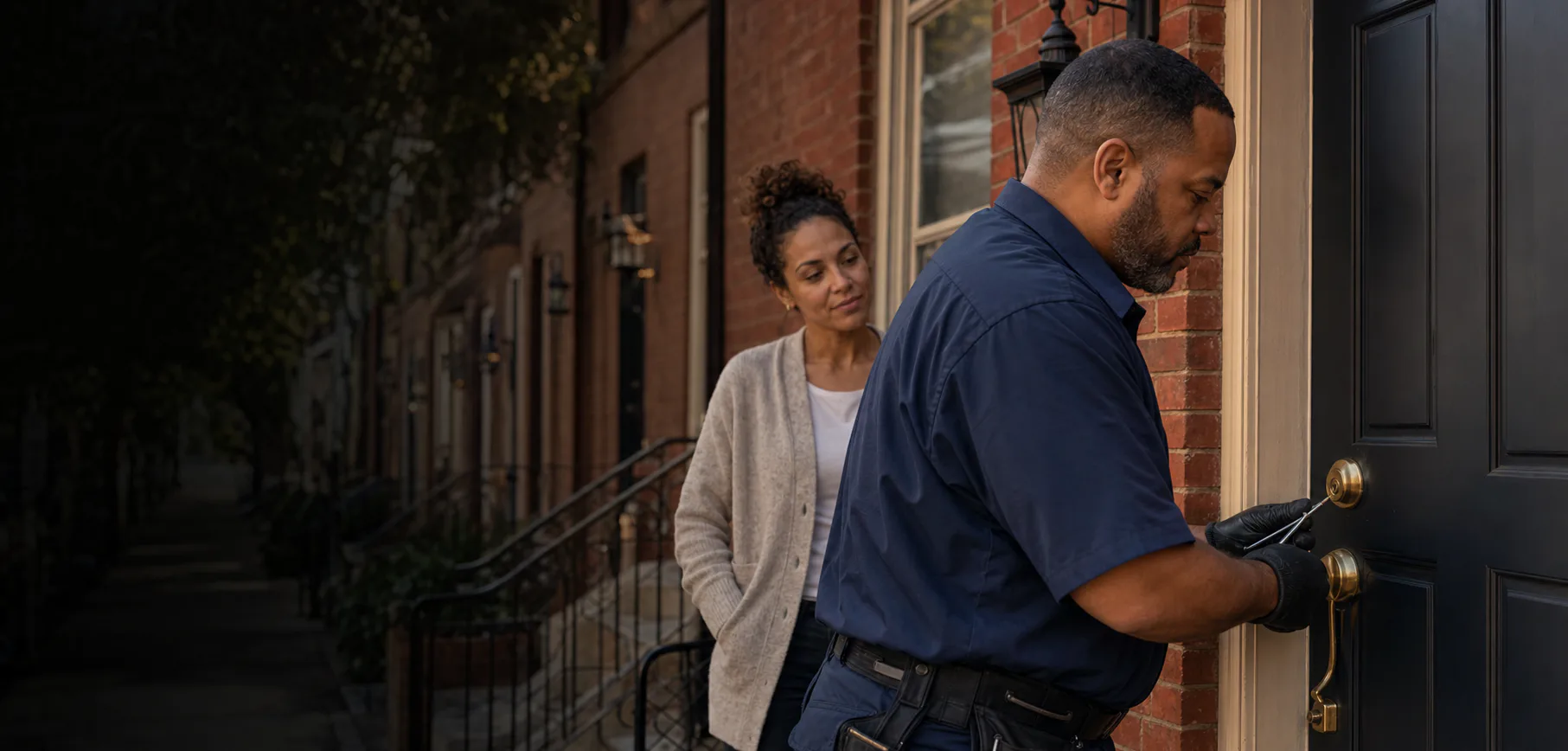
There is a line between a DIY fix and a job for a local locksmith. If your key turns but the bolt does not move, the problem is probably inside the lock mechanism. That is a repair best left to someone with the right tools and replacement parts. Trying to disassemble a Mul-T-Lock cylinder without training can ruin the lock and void any warranty. Similarly, if you have a keyless entry system that is glitching, the electronics might need reprogramming or a new circuit board. A residential locksmith who works with electronic locks every day can diagnose the issue in minutes.
Automotive locksmith work is a different beast. Car locks are smaller, use different wafers and springs, and often have built-in security features that prevent picking. If you lock your keys in the car in Philadelphia, a 24/7 emergency service can get you back on the road without damaging the door or the lock. I have seen too many drivers try to pry the door frame open and end up with a bent door and a bigger bill. Sometimes the smartest move is to let a professional handle it.
How to Avoid Emergency Lock Repairs
Preventive maintenance saves money and frustration. Lubricating your locks once a year with a graphite powder or a silicone spray keeps the pins moving freely. Avoid oil-based lubricants, because they attract dust and gum up over time. Check the screws on your hinges and strike plate every few months. A loose hinge can throw off the alignment of the entire lockset. If you have a SmartKey deadbolt, replace the batteries before they die. Most models flash a warning light when the battery is low, but it is easy to ignore until the lock stops working on a cold night.
Another tip: if you move into a new home, have the locks rekeyed or replaced. You never know how many copies of the key are floating around. A local locksmith can rekey all your locks to a single key, or install new cylinders from a brand you trust. This is especially important for homes in Rittenhouse Square and other popular neighborhoods where turnover is high and property management companies may have given keys to contractors, cleaners, and previous tenants.
For landlords and property managers, keeping a spare set of master keys with a trusted commercial locksmith can save you from after-hours calls. If a tenant loses their key at 2 a.m., the locksmith can let them in and then rekey the cylinder the next day. That kind of arrangement requires a relationship with a locksmith who knows your buildings and your lock systems. It is worth the effort to find someone reliable before you need them.
The Real Cost of Philadelphia Door Lock Repair
Prices vary depending on the time of day, the complexity of the lock, and the distance the locksmith has to travel. A standard service call during business hours for a simple lockout might run between $75 and $150. If the technician has to drill out a broken lock or install a new lockset, the cost goes up. Always ask for an estimate before work starts. A reputable local locksmith will give you a price over the phone and stick to it. Avoid companies that quote a low price and then add hidden fees when they arrive.
Investing in quality hardware pays off over the long run. A Schlage deadbolt costs more than a budget brand, but it will last decades and resist picking and bumping. A Medeco high-security cylinder gives you patented key control, meaning only authorized dealers can make copies. For commercial properties, that level of security can prevent unauthorized key duplication and reduce the risk of internal theft. Mul-T-Lock offers interchangeable core cylinders that let you rekey a lock in seconds without removing it from the door. That is a huge convenience for businesses that need to change locks frequently.
The bottom line: Philadelphia door lock repair is not just about fixing a broken lock. It is about understanding the door, the frame, the hardware, and the security needs of the people who use them. A good locksmith brings years of experience with all the major brands, a willingness to explain what went wrong, and the ability to solve the problem without upselling unnecessary parts. Whether you need a quick fix for a jammed deadbolt or a full upgrade to keyless entry, find someone who treats your home or business like their own.